Saturday, November 13, 2010

Serial Saturday Part 1: The Lightning Warrior (1931)***

It’s hard to believe, but even I am not old enough to remember serials playing at the local movie theatre. So I won’t bore you with warm and fuzzy stories of Saturday afternoons at the Bijou and how for one thin dime you got an afternoon of exciting entertainment. But I do want to share with you some of the serials I’ve seen on DVD over the years, in hopes that you’ll include a few of these unpolished gems in your own viewing.


Serials go back to the earliest days of commercial film projection. The first silent features were only about 20 minutes long - two-reelers, they were called – and a variety of short films were added to the program for sheer bulk. But even as films got longer and more ambitious, the habit of short subjects continued because audiences had grown to expect them. The action-adventure serial was an important part of that mix, nestled in between the newsreel and countless travelogues with titles like “Manitoba: Land of Contrasts.” Serials also had an important marketing function: each episode ended with a cliffhanger designed to bring patrons back to the seats next week to see how the hero escaped his impossible pickle.

The Lightning Warrior was an early sound serial produced by Mascot – the only serial production company not wiped out by the Depression – and starred the iconic German Shepherd Rin Tin Tin. It’s sketchy if this production features the actual shell shocked canine found by American servicemen wandering the French countryside during WWI, but indications are favorable. For one, this beast does not have the classic Shepherd markings and profile found on later Rinty incarnations. The real Rin Tin Tin’s first screen appearance was a portrayal of a wolf (The Man From Hell's River 1922) and this critter could certainly pass as a Canis Lycaon.


The plot of The Lightning Warrior involves a western mining town in fear of imminent slaughter by a band of marauding Indians. The local tribe has been peaceful for twenty years, but they have recently come under the influence of a mysterious cloaked figure known as The Wolfman, who has been exhorting them to commit random acts of violence. The Wolfman himself has wacked a few people along the way, including the father of a kid named Jimmy (Frankie Darro – more on him in future articles) and the brother of a federal marshall named Alan Scott (dreamy George Brent).

Scott’s deceased brother was the owner of Rin Tin Tin, who now roams the rocky cliffs in search of his master’s killer. Jimmy, Scott and Rinty form an unlikely partnership to bring the Wolfman to justice and save the village from a collective scalping. Along the way there will be fistfights, gunplay, and narrow escapes aplenty.

I don’t have sufficient grounding in the genre to say if The Lightning Warrior is any better or worse than the average serial. It’s generally engaging and fun to watch, if you can overlook the quality of the print, which is dreadful. The soundtrack is noisy and scratchy, and no amount of fiddling with your equipment settings will totally rectify it. The filmmaking has the sloppiness traditionally associated with cheap shows, with some scenes just plain overexposed (no re-shoots allowed), and supporting actors recycled as several characters over the course of the production with no explanation or justification offered.

The Lightning Warrior also suffers from the “flabby midsection” often found in serials, i.e. the middle chapters are largely devoted to chasing red herrings down blind alleys - if I may mix my metaphors -  and do little to actually advance the narrative. Many of the cliffhangers are a cheat as well. When we see the recap of the hero’s peril from the previous week, a shot will be inserted of Rinty or Jimmy standing nearby ready to affect a rescue. Of course, this shot was conveniently omitted in the earlier chapter to build suspense.


With so many wonderful TV series out there, it’s difficult to build a case that modern audiences seeking episodic stories should spend their time immersed in this creaky example from the Paleolithic Age of cinema. It’s not quite bad enough to be funny, although the Italian American day players who attempt to act (and talk) like Indians are unintentionally amusing. But entertainment value is only a secondary reason for curling up with a serial. The point is to experience an ancient and extinct narrative format and revel in vintage American cinematic oddities. And speaking of oddities, don’t miss the next exciting installment when we'll examine the oddest serial of all…


Serial Saturday Part 1: The Lightning Warrior (1931)***

It’s hard to believe, but even I am not old enough to remember serials playing at the local movie theatre. So I won’t bore you with warm and fuzzy stories of Saturday afternoons at the Bijou and how for one thin dime you got an afternoon of exciting entertainment. But I do want to share with you some of the serials I’ve seen on DVD over the years, in hopes that you’ll include a few of these unpolished gems in your own viewing.


Serials go back to the earliest days of commercial film projection. The first silent features were only about 20 minutes long - two-reelers, they were called – and a variety of short films were added to the program for sheer bulk. But even as films got longer and more ambitious, the habit of short subjects continued because audiences had grown to expect them. The action-adventure serial was an important part of that mix, nestled in between the newsreel and countless travelogues with titles like “Manitoba: Land of Contrasts.” Serials also had an important marketing function: each episode ended with a cliffhanger designed to bring patrons back to the seats next week to see how the hero escaped his impossible pickle.

The Lightning Warrior was an early sound serial produced by Mascot – the only serial production company not wiped out by the Depression – and starred the iconic German Shepherd Rin Tin Tin. It’s sketchy if this production features the actual shell shocked canine found by American servicemen wandering the French countryside during WWI, but indications are favorable. For one, this beast does not have the classic Shepherd markings and profile found on later Rinty incarnations. The real Rin Tin Tin’s first screen appearance was a portrayal of a wolf (The Man From Hell's River 1922) and this critter could certainly pass as a Canis Lycaon.


The plot of The Lightning Warrior involves a western mining town in fear of imminent slaughter by a band of marauding Indians. The local tribe has been peaceful for twenty years, but they have recently come under the influence of a mysterious cloaked figure known as The Wolfman, who has been exhorting them to commit random acts of violence. The Wolfman himself has wacked a few people along the way, including the father of a kid named Jimmy (Frankie Darro – more on him in future articles) and the brother of a federal marshall named Alan Scott (dreamy George Brent).

Scott’s deceased brother was the owner of Rin Tin Tin, who now roams the rocky cliffs in search of his master’s killer. Jimmy, Scott and Rinty form an unlikely partnership to bring the Wolfman to justice and save the village from a collective scalping. Along the way there will be fistfights, gunplay, and narrow escapes aplenty.

I don’t have sufficient grounding in the genre to say if The Lightning Warrior is any better or worse than the average serial. It’s generally engaging and fun to watch, if you can overlook the quality of the print, which is dreadful. The soundtrack is noisy and scratchy, and no amount of fiddling with your equipment settings will totally rectify it. The filmmaking has the sloppiness traditionally associated with cheap shows, with some scenes just plain overexposed (no re-shoots allowed), and supporting actors recycled as several characters over the course of the production with no explanation or justification offered.

The Lightning Warrior also suffers from the “flabby midsection” often found in serials, i.e. the middle chapters are largely devoted to chasing red herrings down blind alleys - if I may mix my metaphors -  and do little to actually advance the narrative. Many of the cliffhangers are a cheat as well. When we see the recap of the hero’s peril from the previous week, a shot will be inserted of Rinty or Jimmy standing nearby ready to affect a rescue. Of course, this shot was conveniently omitted in the earlier chapter to build suspense.


With so many wonderful TV series out there, it’s difficult to build a case that modern audiences seeking episodic stories should spend their time immersed in this creaky example from the Paleolithic Age of cinema. It’s not quite bad enough to be funny, although the Italian American day players who attempt to act (and talk) like Indians are unintentionally amusing. But entertainment value is only a secondary reason for curling up with a serial. The point is to experience an ancient and extinct narrative format and revel in vintage American cinematic oddities. And speaking of oddities, don’t miss the next exciting installment when we'll examine the oddest serial of all…


Thursday, November 11, 2010

Tuesday, November 9, 2010

The Egg and I (1947)***


The Egg and I is an amusing and cheerful bit of Americana, filled with old fashioned grit and pluck and sexism. That’s a cheap shot of course. It’s unfair to expect enlightened thought from any American comedy of this period, particularly one that marked the screen debut of Ma and Pa Kettle.


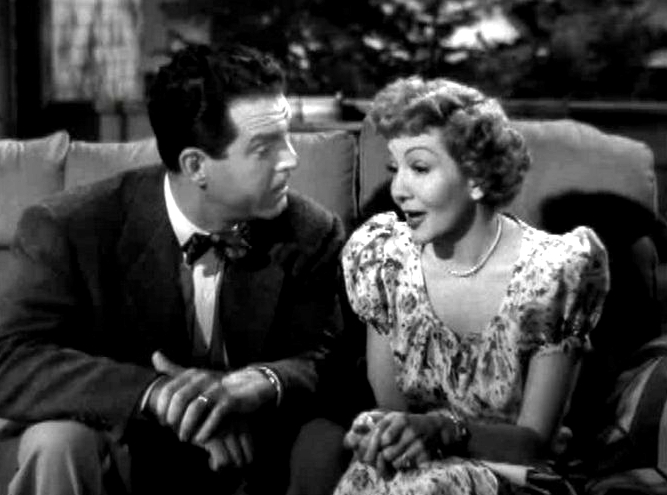
Bob (Fred MacMurray) and Betty (Claudette Colbert) are cozily ensconced in the bridal suite at a fashionable NY hotel. This is their wedding night, and Bob thinks it’s a fine time to finally divulge the cunning life plan he’s developed to his new bride. Bob plans to chuck the rat race of corporate life, head out to the country and pursue a career in chicken ranching. To this end, he has recently purchased 40 godforsaken acres smack dab in the middle of nowhere, without his wife-to-be’s knowledge or consent. Colbert, a bit shell-shocked by the news, dutifully agrees, rather than do the sensible thing, which would be to grab one of new husband’s expensive neckties and strangle him.


The couple’s new agarian digs prove to be a comedy rich environment, complete with a primitive farmhouse and assorted outbuildings  infested with dry-rot and on the verge of toppling. When Bob and Betty arrive in a rusty pick-up truck so overburdened with cows, chickens and farm implements the very earth shudders beneath it, Colbert can only stare at the dusty tableau of their new lives in stunned disbelief. But, this being a 1940s comedy, despair is soon replaced by can-do spirit, and the film follows the pair as they set up housekeeping - and chicken keeping – in their hardscrabble Shangri-La.


The ne’er do well Kettle family (Marjorie Mains, Percy Kilbride and half the children in SAG) soon appear, and MacMurray and Colbert are no match for this band of unwashed, scene-stealing rustics. And here is The Egg and I’s true historical significance: the birth of a cinematic franchise. The Kettles would appear in nine more films over the next decade, and the outsized hillbilly clan would travel from the Ozarks to Paris to Waikiki before Universal finally decided it had milked the concept dry in 1957.


The enduring success of the Kettles sparked by this film had as much to do with sociology as it did with Majorie Main’s superb comedic timing. American life post WWII was transitioning from the wide open spaces of farm life to the tiny, manicured lots of tract homes. While few Americans missed the hardship of agriculture, many secretly wondered if the conformity of the suburbs and the drudgery of the assembly line were really improvements. Films like The Egg and I and the Kettle series gave Americans a chance to laugh at their humble beginnings, yet appreciate the virtues of a homespun, hard knocks style of wisdom. Those who felt nostalgia for large families and arising at 4am to milk the cows could be cured by the antics in these goofy, madcap pastorals. And after a dose of the forgotten pitfalls of rural America, modern life at the widget factory didn’t seem so bad.

IMDb

The Egg and I (1947)***


The Egg and I is an amusing and cheerful bit of Americana, filled with old fashioned grit and pluck and sexism. That’s a cheap shot of course. It’s unfair to expect enlightened thought from any American comedy of this period, particularly one that marked the screen debut of Ma and Pa Kettle.


Bob (Fred MacMurray) and Betty (Claudette Colbert) are cozily ensconced in the bridal suite at a fashionable NY hotel. This is their wedding night, and Bob thinks it’s a fine time to finally divulge the cunning life plan he’s developed to his new bride. Bob plans to chuck the rat race of corporate life, head out to the country and pursue a career in chicken ranching. To this end, he has recently purchased 40 godforsaken acres smack dab in the middle of nowhere, without his wife-to-be’s knowledge or consent. Colbert, a bit shell-shocked by the news, dutifully agrees, rather than do the sensible thing, which would be to grab one of new husband’s expensive neckties and strangle him.


The couple’s new agarian digs prove to be a comedy rich environment, complete with a primitive farmhouse and assorted outbuildings  infested with dry-rot and on the verge of toppling. When Bob and Betty arrive in a rusty pick-up truck so overburdened with cows, chickens and farm implements the very earth shudders beneath it, Colbert can only stare at the dusty tableau of their new lives in stunned disbelief. But, this being a 1940s comedy, despair is soon replaced by can-do spirit, and the film follows the pair as they set up housekeeping - and chicken keeping – in their hardscrabble Shangri-La.


The ne’er do well Kettle family (Marjorie Mains, Percy Kilbride and half the children in SAG) soon appear, and MacMurray and Colbert are no match for this band of unwashed, scene-stealing rustics. And here is The Egg and I’s true historical significance: the birth of a cinematic franchise. The Kettles would appear in nine more films over the next decade, and the outsized hillbilly clan would travel from the Ozarks to Paris to Waikiki before Universal finally decided it had milked the concept dry in 1957.


The enduring success of the Kettles sparked by this film had as much to do with sociology as it did with Majorie Main’s superb comedic timing. American life post WWII was transitioning from the wide open spaces of farm life to the tiny, manicured lots of tract homes. While few Americans missed the hardship of agriculture, many secretly wondered if the conformity of the suburbs and the drudgery of the assembly line were really improvements. Films like The Egg and I and the Kettle series gave Americans a chance to laugh at their humble beginnings, yet appreciate the virtues of a homespun, hard knocks style of wisdom. Those who felt nostalgia for large families and arising at 4am to milk the cows could be cured by the antics in these goofy, madcap pastorals. And after a dose of the forgotten pitfalls of rural America, modern life at the widget factory didn’t seem so bad.

IMDb

Sunday, November 7, 2010

Wild Grass (2009) ***1/2


French directors of a certain age like Resnais, Godard and the recently deceased Rohmer and Chabrol, have managed to remain creative and vital in a very tough business. While Wild Grass certainly has its weaknesses, it’s also a haunting and compelling piece of cinema.

Roma (2018) ✭✭✭✭✭

Alfonso Cuarón’s directorial career has dealt with everything from updated Dickens ( Great Expectations ) to twisted coming of age ( Y Tu Ma...